gear
What Your Shoes Are Actually Doing
Cushioning, traction, torsional rigidity — a plain-language guide to basketball footwear.
Devin Roy · Jul 18, 2026
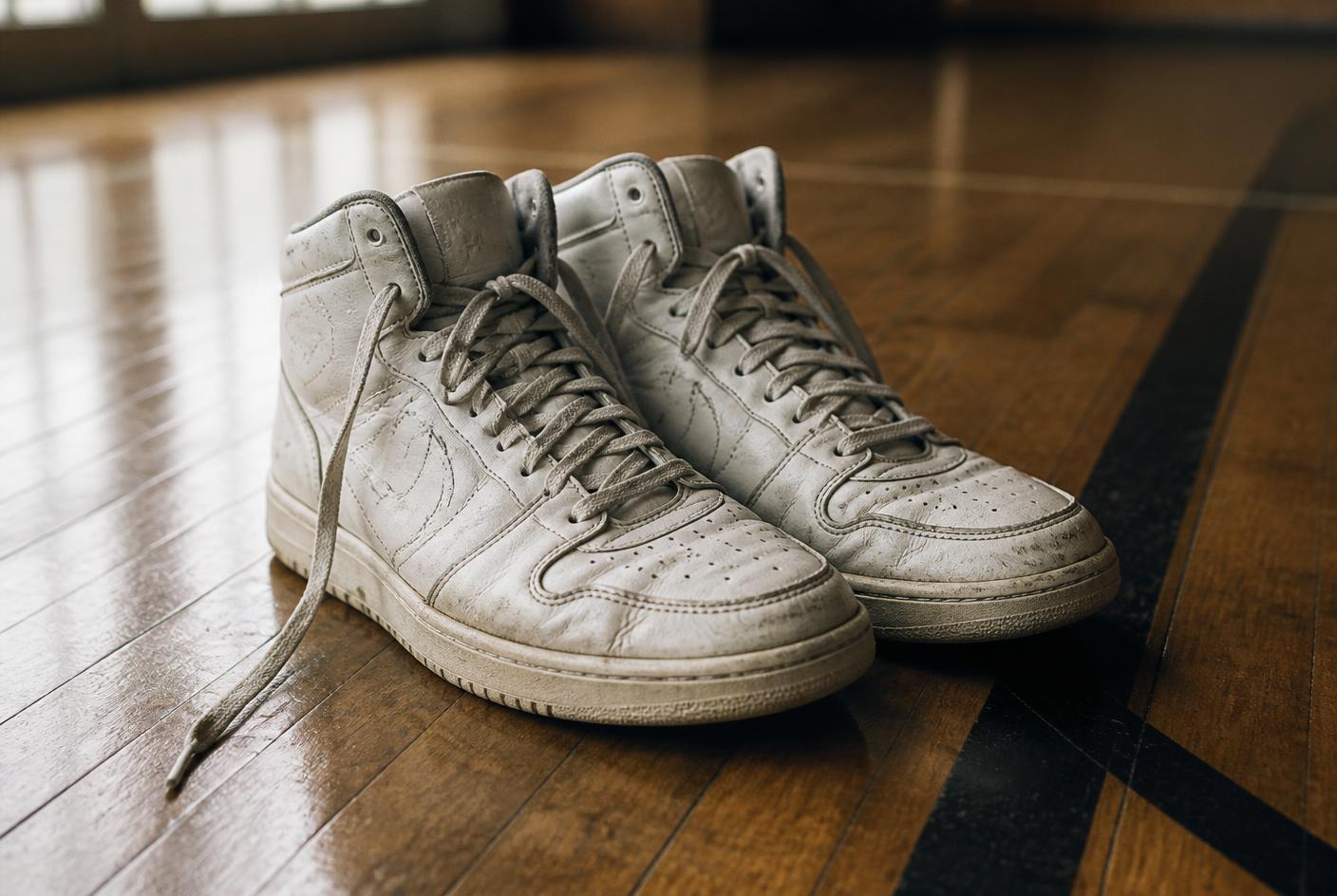
Sneaker marketing is a language designed to make you feel underequipped. Here is the translation.
Cushioning is about impact, not comfort. Softer foam feels better standing in a store and worse in the fourth quarter, because energy that goes into compressing foam does not come back into your jump. Guards generally want less; bigs generally want more.
Traction is a function of rubber compound and pattern, and it is almost entirely ruined by dust. The best outsole on a dirty floor is worse than a mediocre outsole on a clean one. Wipe.
Torsional rigidity — how much the shoe resists twisting between forefoot and heel — is the one spec nobody advertises and the one most correlated with ankle safety. Hold the shoe at both ends and wring it. If it twists like a towel, put it back.
Everything else is colorway.
Ready to buy?
Shop the full gift catalog
Every item in this guide — plus dozens more unique basketball gifts — is in our curated catalog.
Browse all gifts →Curated gear
Find the next gift
Browse our full catalog of unique basketball gifts, art and collectibles.
Shop all gifts →Common questions
- What should I look for in a basketball shoe?
- Three things matter most: cushioning that matches your surface and weight, traction that grips the floors you actually play on, and torsional rigidity so the shoe does not twist under a hard cut. Fit comes before any of it — a shoe that slides in the heel undoes every other feature.
- Do high-tops prevent ankle injuries?
- Collar height on its own has not been shown to prevent ankle sprains. What helps is a stable, well-fitted platform, strong ankles, and — if you have a sprain history — a brace or tape.
- How often should basketball shoes be replaced?
- Watch the outsole and the midsole rather than the calendar. When the traction pattern is polished smooth or the foam stops rebounding and feels flat underfoot, the shoe is done — often after a few months of frequent outdoor play.